
NCC Bathroom Standards: What Australian Homeowners Actually Need to Know
The NCC is the rulebook every bathroom renovation in Australia has to follow — whether your builder mentions it or not.
Waterproofing, ventilation, electrical safety zones, structural loads — the NCC has something to say about all of it. Here’s what it actually requires, in plain English.
What Is the National Construction Code?
The NCC is the rulebook every bathroom renovation in Australia has to follow — whether your builder mentions it or not.
It stands for the National Construction Code, published by the Australian Building Codes Board (ABCB). Not guidelines. Not best practice. Minimum legal standards for all building work in the country, full stop.
The code is split into volumes. Volume One covers commercial and multi-residential buildings — offices, apartments, that kind of thing. Volume Two is the one that applies to standard houses, garages, and outbuildings. Renovating a bathroom in a home? You’re under Volume Two. There’s also a Volume Three covering plumbing and drainage, which comes into play when your renovation involves moving or adding fixtures.
Bathrooms sit at the intersection of almost every trade. Waterproofing, ventilation, electrical, structural — the NCC has specific requirements across all of it. And when any one of those areas is done wrong, the consequences aren’t just cosmetic. They’re expensive, and they tend to surface at the worst possible time.
Related: The NCC doesn’t operate alone — it works alongside state and local building codes and compliance requirements ›
Does the NCC Apply to Bathroom Renovations?
Yes — and this is where a lot of homeowners get caught off guard.
The common assumption is that the NCC only matters for new builds. It doesn’t. The moment your renovation crosses certain types of work, you’re operating under the code whether you know it or not. Ignorance of that isn’t a defence when an inspector turns up.
What triggers it varies by scope. Any work requiring a building permit, wet area waterproofing in a new location, changes to the electrical layout, or structural alterations to the room — all of that brings the NCC into play. Even a renovation that looks purely cosmetic can trigger compliance obligations if the work disturbs the waterproofing membrane underneath. New tiles over an old shower doesn’t automatically mean you’ve left the membrane alone.
New Builds vs Renovations — What Changes?
A new build has to satisfy the NCC across the board. A renovation is more nuanced. The principle that applies to existing homes is sometimes described as “as much as practicable” — the work you’re doing needs to comply, but you’re not obligated to rip out everything else in the bathroom just because it was built under an older code.
That said, “as much as practicable” is not a loophole. You can’t install a non-compliant waterproofing system because the rest of the bathroom is from 1987. The new work complies, or it doesn’t.
Performance Requirements vs Deemed-to-Satisfy (DTS)
Most homeowners have never heard of either of these, which is fine — because in practice, almost every renovation takes the same path.
The Deemed-to-Satisfy pathway is prescriptive. The NCC tells you exactly what to use, how to apply it, and what rates to hit. Do that, and you’re compliant. It’s how the overwhelming majority of bathroom renovations are built.
The Performance pathway lets you demonstrate compliance differently — instead of following prescriptive rules, you show that your approach achieves the same outcome by another means. It requires specialist documentation, sometimes engineering sign-off, and a certifier to accept the case. For a typical bathroom renovation, you’ll never need to think about it.
What “Substantial Renovation” Means in Practice
The term matters because it affects how broadly the NCC applies to your project. A substantial renovation generally means work that goes beyond surface finishes — walls moved, wet areas relocated, significant electrical or plumbing reconfiguration. The more the scope expands, the more comprehensively the code kicks in.
Your certifier or local council can give you a specific ruling on your project. When in doubt, ask before you start — not after.
What the NCC Actually Requires in a Bathroom
The NCC’s requirements for bathrooms span several distinct areas, and they don’t all carry the same level of risk if something goes wrong.
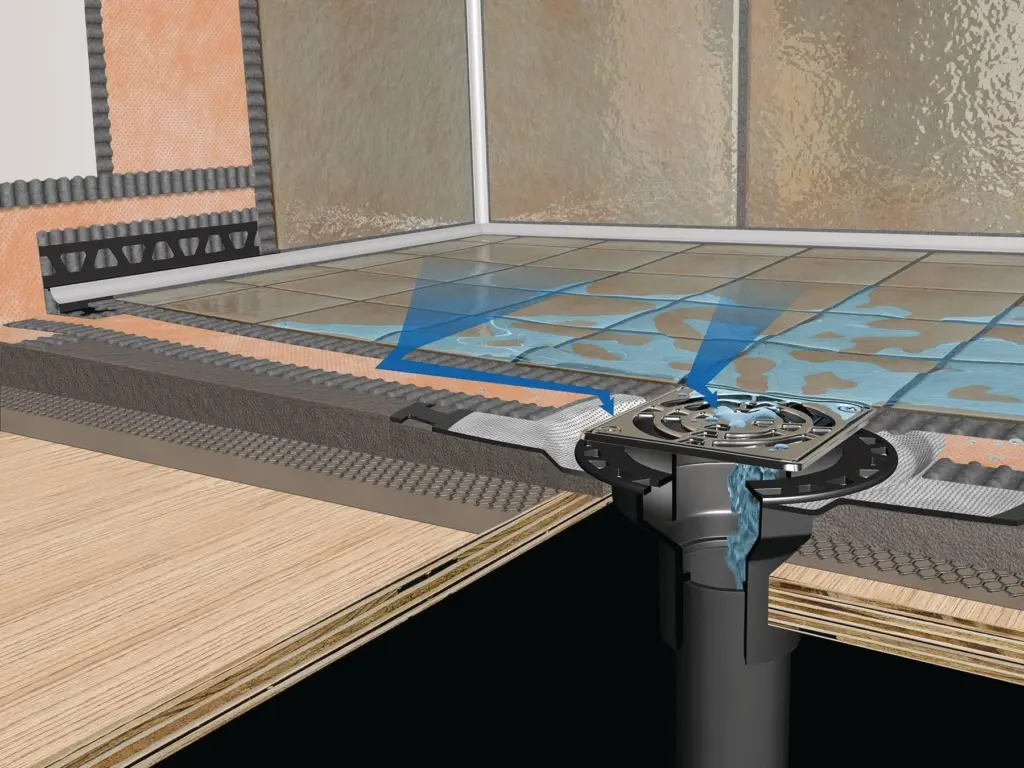
Every wet area — showers, baths, floor waste surrounds — must be waterproofed to AS 3740. Membrane type, coverage extent, and application method are all specified. Hidden behind tiles until failure. The most expensive compliance miss in a bathroom renovation.
Natural (openable window to outside, meeting minimum area) or mechanical (exhaust fan meeting NCC airflow rates). Not every fan at the hardware store meets the standard. Inadequate ventilation grows mould inside wall cavities — no visible warning until damage is done.
Safety zones under AS/NZS 3000 govern where fixtures, switches, and power points can be placed relative to water. Must be done by a licensed electrician — no exceptions. Some placements that look obvious on a plan simply aren’t permissible once you map the zones.
Tiled wet areas and freestanding tubs put significant load on subfloor and framing. In older homes, existing framing sometimes isn’t adequate without modification. An engineer’s assessment isn’t always required — but a good renovator identifies when it is, before demo starts.
Not required in standard Class 1 residential homes. AS 1428.1 provisions apply to aged care, boarding houses, and specific circumstances like disability modification grants. For most homeowners, accessible design is a choice. For some investors and developers, the picture changes — check with your certifier.
Heat lamps, towel rails, and exhaust fans contribute to the building’s energy load under the NCC. A like-for-like renovation rarely creates issues. A major renovation triggering a full energy assessment may pull the bathroom’s heating load into a NatHERS calculation.
Related: Waterproofing is the most consequential of all NCC bathroom requirements. See our AS 3740 waterproofing compliance guide ›
Wait — Is It the NCC or the BCA?
If you’ve done any research on this, you’ve almost certainly seen both terms. They’re the same document.
The Building Code of Australia — the BCA — was rebranded to the National Construction Code in 2011. Same regulatory framework, updated structure, different name. But plenty of builders, tradespeople, older council documents, and building reports still use BCA. When they do, they mean NCC. It’s not a different standard; it’s just dated terminology that hasn’t fully cleared the industry.
Current version is NCC 2022, with amendments that updated energy efficiency requirements and made some changes to waterproofing provisions. If you’re working from information that references the 2019 edition, it’s worth checking whether those specific requirements have moved.
Quick reference: BCA = NCC. Same rulebook, updated name. If a builder or council document references the BCA, they mean the NCC.
Does the NCC Apply the Same Way in Every State?
Broadly yes — but the NCC is a national floor, not a ceiling.
Each state and territory adopts the code, then layers their own regulations on top. The NCC sets the minimum. States can require more; they can’t require less. So depending on where you are, there may be additional provisions that apply beyond what the national code specifies.
Adopted under the Environmental Planning and Assessment Act with NSW-specific variations — particularly around fire safety and some energy provisions. Home Building Act 1989 also applies to licensed contractor obligations on projects over $20,000.
Building Regulations 2018 operate alongside the NCC, with historically more detailed requirements in some structural provisions. The NCC is the baseline; Victoria layers specifics on top.
Adopted under the Building Act 1975. Parts of northern Queensland have additional cyclone-resistance requirements that affect construction standards in those zones. Worth confirming if you’re in a designated cyclone area.
Has a track record of adopting new NCC editions with a slight delay while state-specific provisions are aligned. Always confirm the currently adopted edition with the Building Commission WA rather than assuming it matches the national release.
Generally adopt the NCC with minimal variation, though each has its own administrative requirements. The NCC baseline applies. Your local council is the definitive source for what applies to your specific project.
The practical point: The NCC is where your understanding should start — but your local council and a certifier in your state are the definitive source for your project. See our full building codes and compliance guide ›
What Happens If Your Bathroom Doesn’t Meet NCC Standards?
Non-compliance isn’t a paperwork issue. It costs money — sometimes a lot of it — and the timing is usually terrible.
Failed inspections
Work stops. You rectify the problem, pay for the re-inspection, and if the issue is buried under tiles that have already been laid, you’re paying to undo work before you can even start fixing the underlying problem. Delays cost money in holding costs, lost rental income, temporary accommodation — whatever your situation is.
Insurance complications
Home and contents policies routinely contain exclusions for damage caused by non-compliant building work. Water damage from a failed waterproofing membrane — one of the most common and expensive claims — can be rejected if the waterproofing wasn’t compliant when it was installed. That’s not a theoretical scenario. It happens, and insurers look for it.
Point of sale problems
Building inspectors flag non-compliant bathroom work, and once it’s in the report it’s disclosed. That can mean rectification before settlement, a price reduction, or a sale that falls over entirely. Non-compliant bathrooms are a liability that follows the property — not just the current owner.
Rectification orders
A council or building surveyor can require that non-compliant work be removed and redone. In many cases the cost falls to the owner, not the builder — particularly if the builder is no longer trading or the contract situation is disputed. The paperwork that would have made liability clear — permits, inspection certificates, compliance certificates — tends to be exactly what’s missing in these situations.
Getting it right the first time is cheaper. Every single time. See our full compliance guide ›
Not sure if your renovation scope triggers NCC requirements? We connect homeowners with experienced, vetted renovation specialists across NSW and ACT. Lifestyle Bathrooms is a referral and connector service — not a licenced contractor. Request a free consultation ›
How a Good Renovation Team Handles NCC Compliance
A licensed renovation team doesn’t treat NCC compliance as something to navigate around. It’s just part of doing the job properly.
The permits get pulled before work starts — not when an inspector asks, not when a problem emerges. Before. A builder who tells you permits aren’t necessary for a significant renovation scope is either wrong about what your project involves or hoping you won’t find out until later. Neither is a good sign.
Subcontractor licensing is something most homeowners never think to check. Wet area waterproofing has to be done by a licensed waterproofer. Electrical by a licensed electrician. Plumbing by a licensed plumber. Coordinating those trades — and making sure the handoffs between them are clean — is a core part of what a builder manages.
Compliance documentation is the other thing that separates a properly run renovation from one you’ll have problems with later. A compliant bathroom generates a paper trail: building permit, waterproofing certificate, electrical certificate of compliance, sometimes a plumbing compliance certificate. When the job finishes, that documentation should be handed to you. If it isn’t, you don’t have evidence that the work was done properly — and that matters the day you sell or need to make a claim.
Questions to Ask Any Bathroom Renovator About Compliance
Before you sign anything, ask these directly and listen carefully to how they’re answered. A renovation team that handles compliance properly will answer all of them without hesitation.
Are you a licensed builder in [your state]?
Verify with the relevant state licensing authority. A licence number should be easy to produce on request.
Who’s doing the waterproofing, and are they licensed?
Wet area waterproofing in NSW requires a licensed waterproofer. Other states have equivalent licensing requirements.
Do you coordinate the building permit, or does that fall to me?
A full-service renovation team handles this. If the answer is vague, that’s worth clarifying before you sign.
What compliance certificates will I receive at completion?
Expect: waterproofing certificate, electrical certificate of compliance, plumbing compliance certificate where applicable.
Who books the inspection, and who attends if issues arise?
Inspections shouldn’t be a surprise to either party. The builder should manage this process, not hand it to you.
Is flexible adhesive specified for large-format tiles?
Standard adhesive on large-format tiles over a heated substrate is a failure waiting to happen. It should be in the quote.
Common Questions
In most cases, yes. Wet area waterproofing, electrical work, structural changes, anything requiring a building permit — all of that triggers NCC requirements. It’s not just new builds. Even work that looks cosmetic can create compliance obligations if it disturbs an existing waterproofing membrane or electrical system. If you’re not sure whether your scope crosses the line, a building certifier in your state can tell you before you start — which is far better than finding out mid-project.
They’re the same thing. The Building Code of Australia was renamed the National Construction Code in 2011. Same regulatory framework, updated name. Plenty of tradies and older documents still use BCA — when they do, they mean NCC. If your builder quotes something as “BCA compliant,” that’s not a different standard, just terminology that hasn’t fully updated.
Depends on scope and state. Swapping a tap, replacing a vanity, changing a toilet suite — that’s generally cosmetic and usually doesn’t require a permit. The moment you’re into new wet area waterproofing, structural changes, electrical reconfiguration, or plumbing alterations, a permit is typically required. The exact threshold varies by state. Your local council or a private building certifier can confirm what applies to your specific job. Don’t assume it’s fine. Ask.
Failed building inspections that stop work and require rectification at your cost. Insurance complications — particularly water damage claims — if non-compliant waterproofing is involved. Issues at point of sale when a building inspector flags the work in their report. Potentially a council rectification order requiring the work to be removed and redone — often at the owner’s expense. None of those outcomes are minor, and all of them cost more than doing it correctly the first time.
No, not as a standard requirement for Class 1 dwellings — which is what most houses are classified as. Accessibility provisions under AS 1428.1 apply to other building classes — aged care facilities, boarding houses, Class 3 buildings — and to specific circumstances like disability modifications. For a standard house renovation, accessible design is a choice, not a code mandate. If you’re building for disability support accommodation or working under a specific government funding arrangement, the requirements differ — check with your certifier.
Both, but for different things. Your builder is responsible for delivering compliant work. As the owner, you’re responsible for ensuring permitted work is inspected, certified, and documented. In practice, the safest position is working with a licensed builder who manages the compliance process end-to-end — permits, inspections, subcontractor licensing, certificates. That way there’s no ambiguity about who’s accountable for what, and you have the paperwork to back it up if it ever matters.
Volume Two of the NCC covers Class 1 and Class 10 buildings. Class 1 is a standard residential home — detached house, townhouse, terrace. Class 10 covers non-habitable structures like garages and sheds. If you’re renovating a bathroom in a standard residential property, Volume Two is the part of the NCC that applies to you. Volume One is for commercial buildings and apartments.
Owner-builders can take on some work, but the licensing threshold varies by state and is lower than most people expect. What doesn’t change regardless of who manages the project: electrical work requires a licensed electrician, and plumbing requires a licensed plumber. That’s non-negotiable. If you’re considering the owner-builder path, check the specific rules for your state before you commit to it.