
Acrylic vs Stone Baths: What’s Actually Different?
Stone resin looks better in a showroom. Acrylic installs in half the time and costs significantly less. Which one is right for your renovation depends on your bathroom, your budget, and how long you plan to live there — not on which one photographs better.
The Short Answer
Six areas where the two materials genuinely diverge. No marketing spin — just what matters when you’re trying to decide.
Acrylic Baths: The Honest Picture
Acrylic is reinforced thermoplastic — formed into a bath shell and backed with fibreglass or resin for structural rigidity. It has been the default bath material in Australian homes for decades, and that’s not an accident.
The main reason it dominates is weight. A standard acrylic bath comes in at 20–30 kg. Stone resin starts at 80 kg and goes up from there. For most Australian homes — particularly older properties with timber subfloors — that’s a meaningful difference in what’s structurally feasible before any other decision is made.
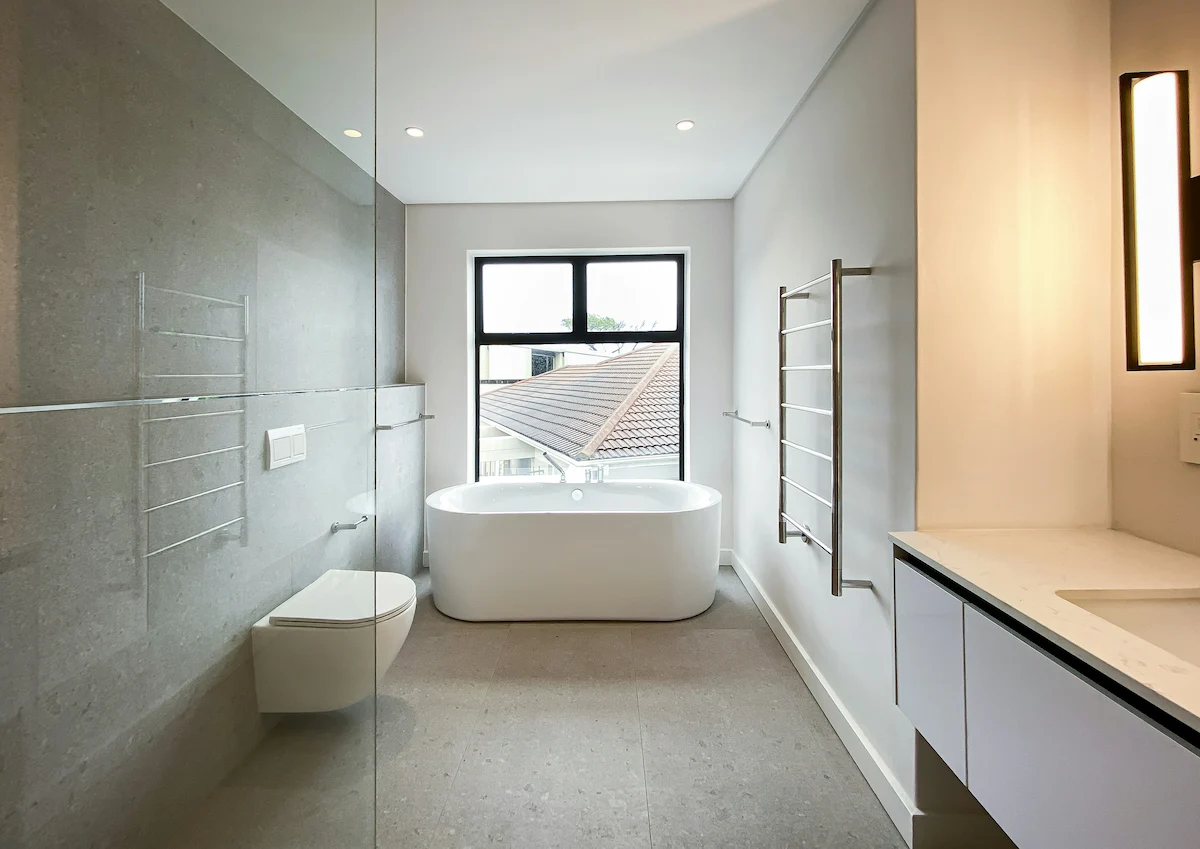
Acrylic also doesn’t feel cold the way a lot of people expect. It’s not as warm to the touch as stone resin, but it’s not the shock of a cold surface either. And if it scratches, surface damage can often be buffed or repaired without a full replacement — something stone resin doesn’t offer in the same way.
Where it falls short: the surface isn’t as hard. Deep scratches can penetrate through to the substrate. Prolonged UV exposure — unusual in most bathrooms, but relevant if yours has significant natural light — can cause gradual yellowing over time. And under load, cheaper acrylic units can flex slightly. That stresses the silicone seals and grout, which creates problems further down the track.
A well-specified acrylic bath from a reputable brand, installed correctly, will comfortably reach 15–20 years. The issues arise when the unit is cheap, the substrate wasn’t properly prepared, or the installation cut corners. The bath isn’t always the problem.
Stone Resin Baths: What You’re Actually Paying For
Start with the terminology, because it’s genuinely confusing. “Stone bath”, “stone resin bath”, “cast stone bath”, and “composite stone bath” all refer to the same product category. The material is crushed stone aggregate — typically quartz or limestone — bound with a resin compound and cast into shape. It’s not natural stone. Similar in feel. Different in structure.
Weight is the first thing to understand. A standard stone resin freestanding bath sits at 80–120 kg before water is added. Some larger or thicker formats push past 150 kg. That matters significantly for older Australian homes with timber subfloors, which may not have been designed to carry that load in a concentrated area. Whether a floor can handle it requires a professional assessment. Not a conversation to have after the bath has been ordered.
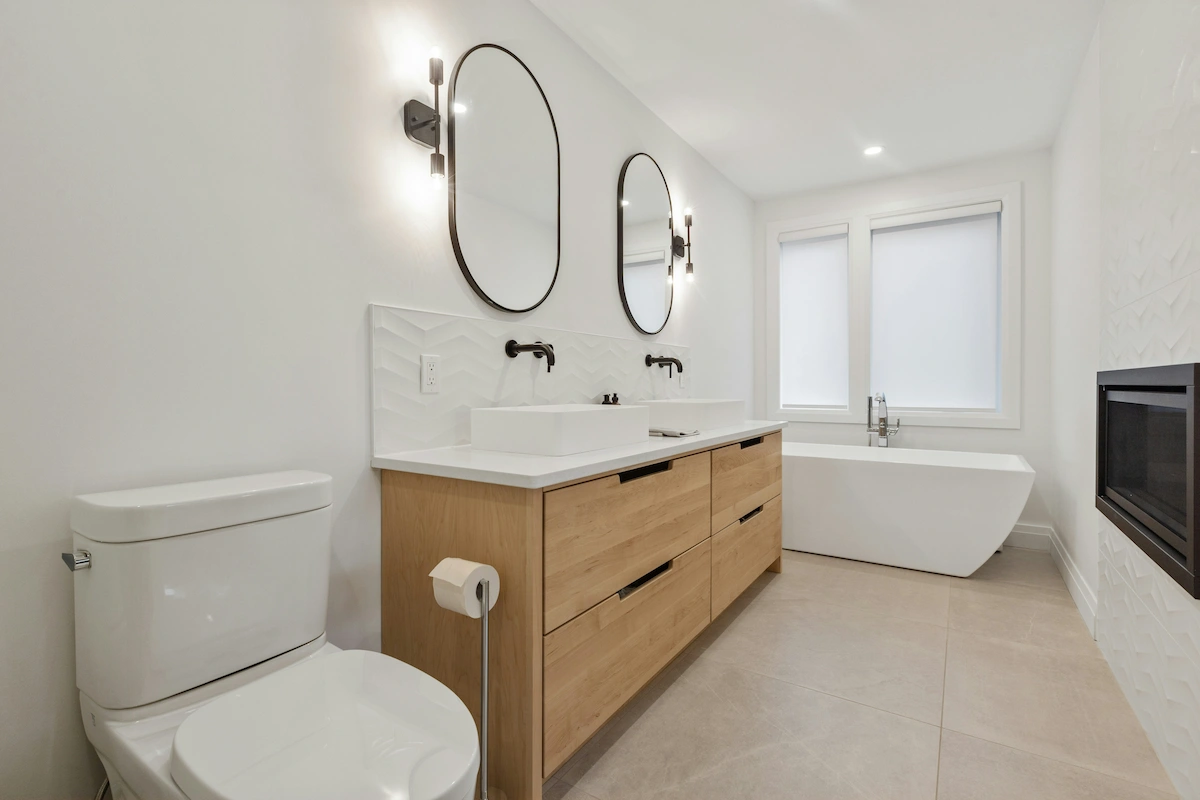
What stone resin does deliver is heat retention. Water stays warm noticeably longer than in an acrylic bath — 20 to 30 minutes longer is a reasonable estimate, though it varies by product thickness and room temperature. The surface itself also feels warm to the touch before the bath is filled. For a lot of people, this is the feature that justifies the cost. It’s not marketing. It’s genuinely different.
Surface durability is another real advantage. Stone resin resists scratching better than acrylic, and the colour runs through the material rather than sitting on a surface layer — which means minor surface wear doesn’t show the way it can with acrylic over time.
The cost premium is real and worth being clear about. Supply-only pricing for stone resin starts around $1,200 and extends well past $6,000 for larger or designer formats. Add installation, and you’re looking at a meaningful jump above acrylic. When that premium is justified: full strip-out renovations in owner-occupied homes, high-spec bathroom builds, properties at the top of their local market. When it probably isn’t: rental investments, secondary bathrooms, or projects where the budget is already stretched.
Acrylic vs Stone Resin: Side by Side
Ten criteria. Both materials assessed on the same terms. Where values vary by product spec or brand, that’s noted.
| Criterion | Acrylic | Stone Resin |
|---|---|---|
| Supply price range | $300–$1,800 | $1,200–$6,000+ |
| Installed cost range | $700–$2,600 | $1,800–$7,200+ |
| Weight | 20–30 kg | 80–150 kg |
| Heat retention | Moderate — cools within 15–20 min | High — retains heat 20–30 min longer |
| Surface feel | Slightly warm to touch | Noticeably warm before filling |
| Durability (lifespan) | 15–20 years (correctly installed) | 20–30 years |
| Repairability | Surface scratches repairable | Limited — harder to repair invisibly |
| Style options | Wide — many shapes and colours | More limited — typically white/grey/black |
| Maintenance | Standard cleaning, avoid abrasives | Non-porous, easy to clean, avoid abrasives |
| Best suited for | Most projects, rentals, budget builds | Owner-occupied, premium builds, showpiece bathrooms |
Which One Is Right for Your Project?
If budget is the primary constraint, acrylic is a legitimate choice — not a compromise. A well-installed acrylic bath from a reputable brand, set in properly prepared surrounds, will perform well for fifteen years or more. The tradies who’ve been doing this work for a long time will tell you the same thing.
For rental properties, the calculation is simpler. Acrylic. You need something durable enough to handle tenant use, straightforward to repair if damaged, and replaceable at a reasonable cost if the situation calls for it. A stone resin bath in an investment unit isn’t an upgrade — it’s an overspecification that won’t recover its cost in rental yield.
Owner-occupiers are where stone resin earns its price tag. Particularly if you’re doing a full strip-out, investing in large-format tiles, or positioning a freestanding bath as the centrepiece of the space. The material has a physical presence that acrylic doesn’t match. If you’re living in the home for the next decade, the daily experience of that bath is worth factoring into the decision.
Older homes — anything pre-1980 with a timber subfloor — need a structural assessment before stone resin goes on the specification sheet. Not always a dealbreaker. A floor can often be reinforced. But it needs to be verified before the bath is ordered, not after it arrives.
Small bathrooms are worth calling out specifically. Freestanding stone baths require clearance on at least three sides, weigh significantly more than an alcove acrylic, and often carry longer lead times due to import timelines. In a well-planned layout, a compact freestanding stone bath can work. In a bathroom where the 3D render only just fits it in — be cautious. The margin between a rendered plan and a real installation is not as wide as it looks on screen.
If you’re not certain which category your project falls into, get a specialist to walk the space before you decide. That’s what we’re here for. We connect you with a licenced renovator who can give you a straight answer based on what’s actually in front of them — not a generic recommendation. Request a free consultation ›
Questions Worth Asking Before You Commit
Any competent renovator should be able to answer these without hesitation. If they can’t, that’s information worth having before you sign anything.
Can you assess our floor load capacity before specifying the bath type?
For stone resin, this isn’t optional. Get it confirmed before the bath is ordered.
What’s the manufacturer warranty on this specific unit — and what voids it?
Installation method matters here. Some warranties require specific fixing or sealing methods that a budget operator may skip.
How does supply-and-install pricing shift between acrylic and stone resin?
A renovator who can’t itemise this clearly is not someone you want specifying your materials.
What are the lead times?
Stone resin baths are often imported. Six to eight weeks from order to delivery isn’t unusual. If you have a fixed project deadline, lead time is not a detail to confirm after you’ve committed.
Have you installed both materials — not just one?
Experience with only acrylic means the recommendation for stone resin (or against it) is based on familiarity, not on what actually suits your project.
Who is responsible if the bath or installation fails inside the warranty period?
The answer to this one tells you everything about how the job will be run.
Not Sure Which Bath Suits Your Project?
Tell us about your bathroom and we’ll connect you with a specialist who’s installed both. No obligation, no sales call — just a straight conversation about what works.
Common Questions
More questions answered on our full FAQ page ›
Depends what you’re building. For a primary bathroom in an owner-occupied home where you want longevity and a premium finish — yes. For a rental investment or a secondary bathroom that’s used occasionally — probably not. The material is better, but better doesn’t always mean worth the price difference in every context.
A properly installed acrylic bath from a reputable brand will comfortably reach 15–20 years with normal maintenance. The lifespan shortens significantly if the substrate wasn’t properly prepared before installation, or if the unit was at the very bottom of the price range. The bath itself is often not the weak point — the installation around it is.
Minor surface scratches — yes, often buffed out or touched up with an acrylic repair kit available from most bathroom suppliers. Deeper damage that’s penetrated through to the substrate is a different problem. A professional repair may still be possible depending on location and severity, but it’s not guaranteed to be invisible. Stone resin, for what it’s worth, is significantly harder to scratch in the first place.
Not most — but some. The concern is primarily older homes with timber subfloors, which may not have been built to take 100 kg+ in a concentrated load. Newer homes on concrete slabs have no issue. Whether your floor can handle it requires an assessment from a licenced professional. Worth checking before the bath is ordered, not after it’s been delivered to site.
For acrylic: roughly $700–$2,600 all-in, depending on the spec and site complexity. For stone resin: $1,800–$7,200+, with the higher end driven by the unit price and the additional handling, floor assessment, and installation precision stone resin requires. These are indicative figures — quotes vary significantly by product and project scope.
Depends on the layout, not just the square meterage. Freestanding baths need clearance on at least three sides. Stone resin adds significant weight and often longer lead times to an already complex specification. In a well-planned small bathroom, a compact freestanding stone bath can absolutely work. In a bathroom where the renders only just accommodate it — be cautious. There is less margin for error in a real installation than in a 3D model.
Yes. The surface feels warm before water is added, and water temperature drops noticeably more slowly. For a lot of people this is the deciding factor, and honestly, it’s a legitimate one.
Acrylic, for most projects. Not because it’s superior in material terms — stone resin is a better material. But acrylic fits more budgets, more structural situations, and more project scopes. Stone resin gets specified when the conditions are right for it: full strip-outs, high-spec builds, owner-occupied homes where the investment makes sense. Any experienced renovator worth using will base their recommendation on your actual project, not a default preference.